What does it mean for something to be “beautiful“? Throughout human history, philosophers, artists, scientists, and poets have attempted to pin down a universal definition for this elusive concept. We feel it when we watch a crimson sunset, hear a haunting melody, or witness an act of profound kindness. Yet, the moment we try to trap beauty in a single sentence, it seems to slip through our fingers.
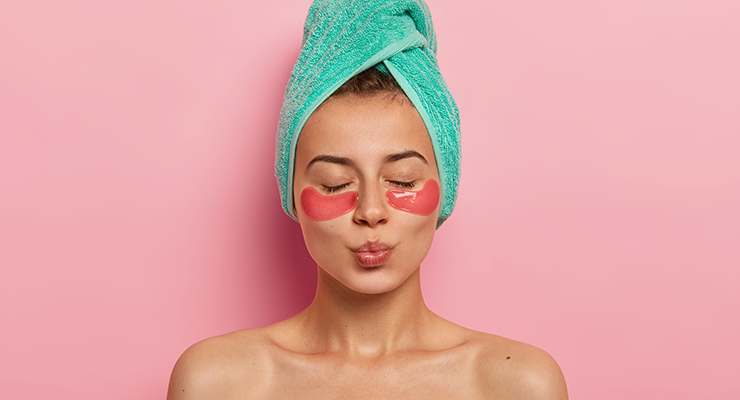
The “beautiful definition” is not a static entry in a dictionary; rather, it is a dynamic intersection of biology, culture, and individual soul. To understand beauty is to understand the very essence of human perception and our connection to the world around us.
The Classical Perspective: Symmetry and Proportion
In the ancient world, particularly in Greece and Rome, beauty was often defined through the lens of mathematics and order. To the Pythagoreans, beauty was synonymous with “harmonia”—the proper balance of parts. This gave birth to the concept of the Golden Ratio, a mathematical proportion found throughout nature, from the spiral of galaxies to the arrangement of petals on a flower.
From this perspective, the definition of beauty is objective. It suggests that there is an inherent “rightness” to certain shapes and structures. If a building, a face, or a vase adheres to these geometric truths, it is beautiful. This classical view emphasizes that beauty is a reflection of the underlying order of the universe. It is a definition rooted in clarity, balance, and the absence of chaos.
The Romantic Shift: Beauty as an Emotional Response
By the 18th and 19th centuries, the definition of beauty underwent a radical transformation. The Romantic movement argued that beauty was not found in the object itself, but in the heart of the beholder. Edmund Burke and Immanuel Kant began to distinguish between “The Beautiful” and “The Sublime.”
In this framework, beauty is that which gives us immediate pleasure without a need for reasoning. It is delicate, colorful, and soothing. The “beautiful definition” shifted from a mathematical formula to an emotional event. It became about the “je ne sais quoi”—that certain something that defies explanation. This era popularized the idea that beauty is subjective, giving rise to the famous proverb: “Beauty is in the eye of the beholder.”
The Biological Blueprint: Why We Are Hardwired for Beauty
Modern science offers a more pragmatic definition of beauty. Evolutionary psychologists argue that our sense of aesthetics is actually a survival mechanism. We find lush, green landscapes beautiful because they once signaled a source of food and water. We find symmetrical faces beautiful because they are often biological indicators of health and genetic vitality.
From a neurological standpoint, beauty triggers the release of dopamine in the brain’s reward centers. When we see something we define as beautiful, our brain essentially tells us, “This is good; this is beneficial; pay attention.” In this sense, the definition of beauty is a biological compass, guiding us toward environments and individuals that foster life and well-being.
The Cultural Prism: Diversity in Definition
While biology provides a baseline, culture acts as a prism that refracts the definition of beauty into a thousand different directions. What is considered beautiful in a remote village in the mountains of Ethiopia may be vastly different from what is celebrated on the runways of Paris or Tokyo.
Culture teaches us to find beauty in specific colors, sounds, and traditions. It defines the “ideal” body type, the “perfect” garden, and the “noblest” architecture. These definitions are fluid, changing with every generation. The beauty of a Japanese “Wabi-sabi” aesthetic, which finds perfection in imperfection and transience, stands in stark contrast to the Western industrial drive for sleek, flawless uniformity. This diversity proves that the definition of beauty is a social contract—a shared agreement on what we choose to value.
The Moral Dimension: Inner Beauty and the Sublime
Perhaps the most profound definition of beauty is one that transcends the physical altogether. “Inner beauty” is not just a cliché; it is a recognition of moral and spiritual excellence. We define a person as beautiful when they exhibit courage, empathy, or integrity.
This type of beauty is often linked to the “Sublime”—an experience that is so vast or powerful that it inspires awe and even a touch of fear. We see this in the self-sacrifice of a hero or the intricate complexity of a scientific discovery. Here, the definition of beauty merges with the definition of truth. As the poet John Keats famously wrote, “Beauty is truth, truth beauty,—that is all ye know on earth, and all ye need to know.”
The Modern Challenge: Beauty in the Digital Age
In the 21st century, we face a new challenge in defining beauty. We live in an era of filtered images, artificial intelligence, and curated digital lives. Our definition of beauty is increasingly being influenced by algorithms and “likes.” This can lead to a narrow, homogenized version of beauty that ignores the messy, authentic reality of human life.
To maintain a healthy definition of beauty today, we must consciously look for it in the unexpected: the wrinkles of an aging face that tell a story of a life lived, the weeds growing through a sidewalk crack, or the silence between notes in a piece of music. The most “beautiful definition” is one that remains inclusive and expansive.
Conclusion
Ultimately, a beautiful definition is one that refuses to stay in a box. It is a tapestry woven from the threads of mathematical precision, emotional resonance, biological necessity, and cultural heritage. Beauty is the bridge between the physical world and the human spirit.
Defining beauty is an ongoing act of creation. Every time we stop to admire a view, every time we choose kindness over cruelty, and every time we create something new, we are refining that definition. It is a reminder that the world is not just a place of utility and survival, but a place of wonder and delight. To find beauty is to find meaning, and that, perhaps, is the most beautiful definition of all.